A Sexist Guide to 19th Century Hysteria
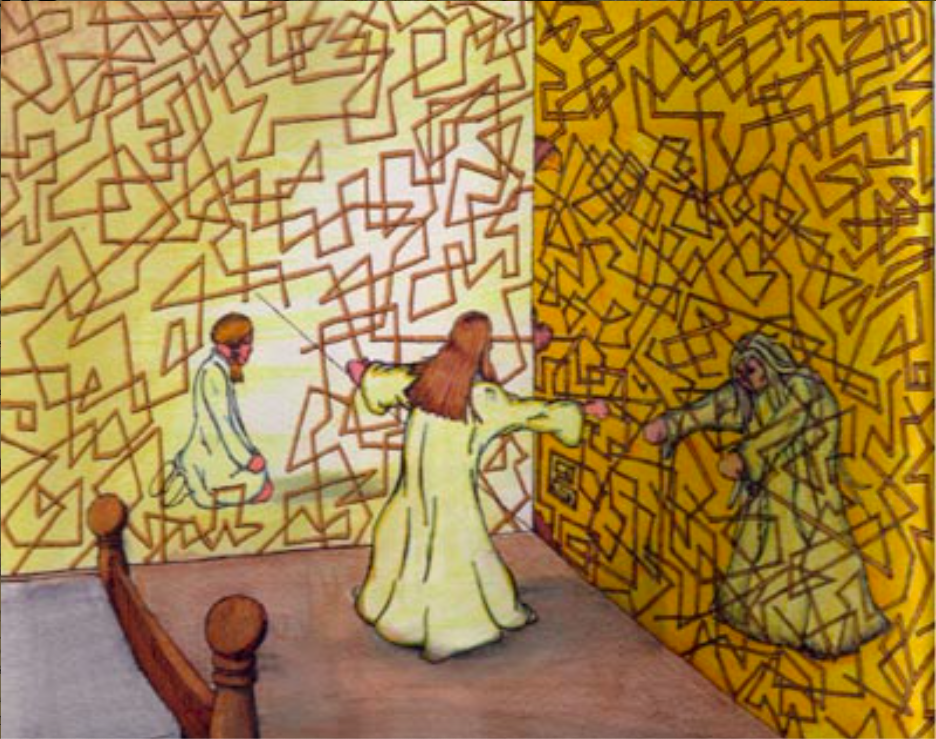
The topic of hysteria has been one that has been prevalent within the study of feminist history, due to it being closely linked and “peculiarly relevant to the female experience”[1]. Hysteria is a word widely known to describe someone (no, this isn’t exclusive to women) who is acting in an erratic or often overly emotional way. Yet back in the 19th Century the word was more prominently used as a diagnosis for women (yes, this time it is exclusive to women) when they were suffering from any mental health illness, or when they were simply not acting as a 19th Century women should (because of course a women in 19th Century society should never be over social, or over think, that is simply preposterous).
There has always been an “existence in virtually every era of Western culture of some clinical entity called hysteria.“[1] This is evident through the literature written at the time, and one of the most important pieces of literature written within the 19th Century regarding the attitude toward hysteria and mental health, not just for women but within the society as a whole, is a short story called The Yellow Wallpaper by Charlotte Perkins Gilman.
For those of you that have never come into contact with The Yellow Wallpaper, I highly suggest you pick up a copy as soon as you can. There is a reason as to why it has remained one of the more important pieces of fiction when looking at mental health and, in some respects, motherhood. The story follows an unnamed narrator and her descent into madness, after her husband (who is a physician and could, in our current society’s terms, be considered a gaslighter.[2]) has diagnosed her with “temporary nervous depression”, which in basic terms mean that he believes the narrator has suffered a nervous breakdown after the birth of their first child. The short story itself, is based upon the experiences of Perkins Gilman herself after giving birth[3], but I will touch upon that in more detail later on.
Of all of Perkins Gilman’s work, The Yellow Wallpaper is one that seems to have passed the test of time. Whenever you look into the literature surrounding women and the society they were living in within the 1800’s, The Yellow Wallpaper always seems to be mentioned, especially when the subject of mental illness and the treatments within this time period are brought to light. This is mainly due to its perception of hysteria, a phenomenon that took Victorian society by storm, and of course became the main diagnosis of women with literally any mental health issues (might I add that these were male doctors. Surprised? No, neither am I.)
The Yellow Wallpaper has become almost synonymous when discussing Victorian society’s relationship with mental health. This is simply because of the way that the narrator has documented her descent into madness has been written in such a profound way by Perkins Gilman. The reason it is written as it is, is because Perkins Gilman was actually writing from her own experiences with mental health and how she was treated. Five years prior to writing The Yellow Wallpaper, Perkins Gilman was prescribed the ‘rest cure’ – which in itself was an entirely sexist way of “curing” a woman suffering with mental illness. – The ‘rest cure’ was introduced as a form of treatment of hysteria in within the 19th Century. It was first brought to attention by Silas Weir Mitchell who was Charlotte Perkins Gilman’s physician, the very same one who prescribed her with the ‘rest cure’ (which is basically bed rest, but a bit more fancy.) that lead to the conception of The Yellow Wallpaper. It is said that “Weir saw the rest cure as particularly suited to treating women, partly because he thought women tolerated a lack of stimulation and inactivity better than men.”[4]. To condense that even further, he thought that women were more accustomed to doing nothing, that their little woman brain would thrive from a lack of stimulation. He may as well have said that Perkins Gilman’s post-natal depression (the correct medical term being postpartum depression), because that IS what she was suffering from, was due to her using her brain too much, or being too creative. In fact, within Perkins Gilman’s article Why I Wrote the Yellow Wallpaper she has written that his exact words were ““never touch pen, brush or pencil as long as [she] lived”.[5] To have a mental illness belittled into something that literally means suffering in the uterus is just downright despicable. But, just when you think it can’t get any worse, it does. Not only did he think that women’s mental illness was down to using their brain too much he also “saw it as a corrective for women who were overly active, socially and physically.”[4]
Researching and reading this from a contemporary perspective, I can say this honestly does leave me speechless and questioning the research put into mental health during this time. But on the other side of the coin, we should really expect this general lack of understanding from the 19th Century. Although I am slightly (okay, maybe more than slightly) outraged that women were being treated in this manner, especially women suffering from mental health issues, the stigma surrounding that of mental health within the 19th Century was not one that was supportive nor understanding of people (because anyone can be affected by the negative impact of mental health) suffering with depression, anxiety, postpartum depression and the many other forms of mental health diagnosis.
The reason The Yellow Wallpaper has remained a popular and important piece of fiction for over 100 years, is because it shows a raw and, as I have said previously, profound account of what it feels like to be suffering and having no one to talk to, or understand what it is you are going through. It also reflects on the sexist society in which Perkins Gilman was living in and how it affected the perception of mental health.
Bibliography
[1] – Carroll Smith-Rosenburg, 1972, ‘The Hysterical Woman: Sex Roles and Role Conflict in 19th Century America’, Social Research, Volume 39, Issue 4, pp. 652-678, https://www.jstor.org/stable/40970115?seq=1
[2] – Sadie Trombetta, 2018, ‘Why The Yellow Wallpaper by Charlotte Perkins Gilman Should Be Required Reading’, Bustle, https://www.bustle.com/p/why-the-yellow-wallpaper-by-charlotte-perkins-gilman-should-be-required-reading-in-2018-9936873
[3] – https://msu.edu/~fellow17/wra210/final/Research%20Paper%20-%20Charlotte%20Perkins%20Gilman.pdf
[5] – Charlotte Perkins Gilman, ‘Why I Wrote the Yellow Wallpaper’ , The Forerunner, https://www.nlm.nih.gov/exhibition/theliteratureofprescription/education/materials/WhyIWroteYellowWallPaper.pdf
 Historical Blog Posts